

Every few years, political leaders promote sporting mega-events such as the Olympic Games and the FIFA World Cup as engines of economic growth, promising tourism booms, job creation, and infrastructure development. That same narrative is now playing out in the United States, as it prepares to host the 2026 FIFA World Cup and the 2028 Olympic Games in Los Angeles — both presented as major economic opportunities.
Yet decades of evidence tell a different story. Studies and past experience show that these events rarely deliver the promised windfalls, often resulting instead in cost overruns, heavy public spending, and infrastructure that struggles to justify its cost long after the event ends. While international organizers capture much of the global revenue, the financial burden of hosting is largely borne by local taxpayers.
The Illusion of Economic Windfalls
The economic case for hosting mega-events relies heavily on impact studies predicting large multiplier effects. Organizers argue that visitor spending will ripple through the local economy, boosting tourism, creating jobs, and generating lasting growth. In practice, however, these projections rarely materialize.
Since 1960, every Olympic Games has gone over its initial budget — a pattern revealing a systemic underestimation of costs. A University of Oxford study found that all 23 host cities examined exceeded their budgets, with Rio and Tokyo experiencing significant overruns of 352 percent and 128 percent, respectively. Thirteen cities faced cost overruns exceeding 100 percent of planned spending.
These overruns are worsened by poor financial returns. The London 2012 Games cost about $14.6 billion but brought in only $5.2 billion; Beijing 2008 cost roughly $42 billion while earning just $3.6 billion; and Tokyo 2020 about $13 billion in costs generated just $5.8 billion. As economists Robert Baade and Victor Matheson have shown, Olympic benefits are consistently overstated while costs are systematically underestimated.
The World Cup follows a similar pattern. FIFA regularly promotes large economic gains — projecting roughly $40 billion in impact for the 2026 tournament in North America — but historical results suggest otherwise. Twelve of the last 14 World Cups since 1966 have resulted in financial losses for host countries.
Recent tournaments highlight the gap between costs and returns. Brazil spent $15 billion to host the 2014 tournament, yet it generated only about $3 billion from visitor spending. Russia invested over $11 billion for the 2018 World Cup, but visitor spending reached just about $1.5 billion. Qatar’s 2022 World Cup cost an estimated $220 billion, making it the most expensive in history, yet tourism and event-related spending brought in only about $2.3–4.1 billion.
Beyond these financial shortfalls, these events often leave behind “white elephants” — costly facilities with little long-term use. For example, Beijing’s Bird’s Nest stadium costs an estimated $10 million a year for maintenance, while Montreal took until 2006 to pay off its 1976 Olympic debt after nearly bankrupting the city. Athens’ 2004 Olympic facilities now stand abandoned, contributing to Greece’s debt crisis, and Rio de Janeiro’s 2016 Games left Brazil with crumbling infrastructure and mounting debt. These outcomes underscore a persistent reality: mega-event investments rarely deliver lasting economic value, but often impose long-term financial burdens.
Why the Economic Promises Rarely Deliver
Despite their disappointing track record, mega-events continue to be promoted through optimistic studies that often rely on unrealistic assumptions. These projections frequently overlook the crowding-out effect, in which regular tourists and locals avoid host cities due to congestion and higher prices, thereby reducing overall economic gains. They also ignore revenue leakage, as much of the income flows to international governing bodies rather than remaining in local economies.
Consequently, the economic benefits are often greatly overstated. Evidence from past events illustrates this gap: the 2002 Salt Lake City Olympics created only about 7,000 temporary jobs — just 10 percent of projections — and during the 2012 London Olympics, only 10 percent of the 48,000 temporary jobs went to the unemployed. In Salt Lake City, general retailers even lost $167 million, despite tourism-related businesses earning $70 million during the event. These outcomes demonstrate that the expected economic gains often fail to materialize.
Hidden costs further weaken the economic argument for hosting these events. Stadium construction and upgrades have traditionally been among the costliest aspects of mega-event planning, often totaling billions and leaving venues that struggle to generate revenue after the event ends. Even when new stadiums are unnecessary, operational costs — like policing, transportation services, emergency services, and fan zones — can impose a heavy financial burden on city budgets.
The preparations for the 2026 FIFA World Cup already highlight these issues. US host cities have requested $625 million in federal aid for security, but they might still face $100–200 million each for stadium upgrades, policing, transportation, and public services — while mandated fan festivals alone can cost up to $1 million per day. According to The Independent, host cities are collectively facing at least $250 million in shortfalls, which has led major cities to recently reduce or cancel large fan festivals due to rising costs, security concerns, and stalled federal funding.
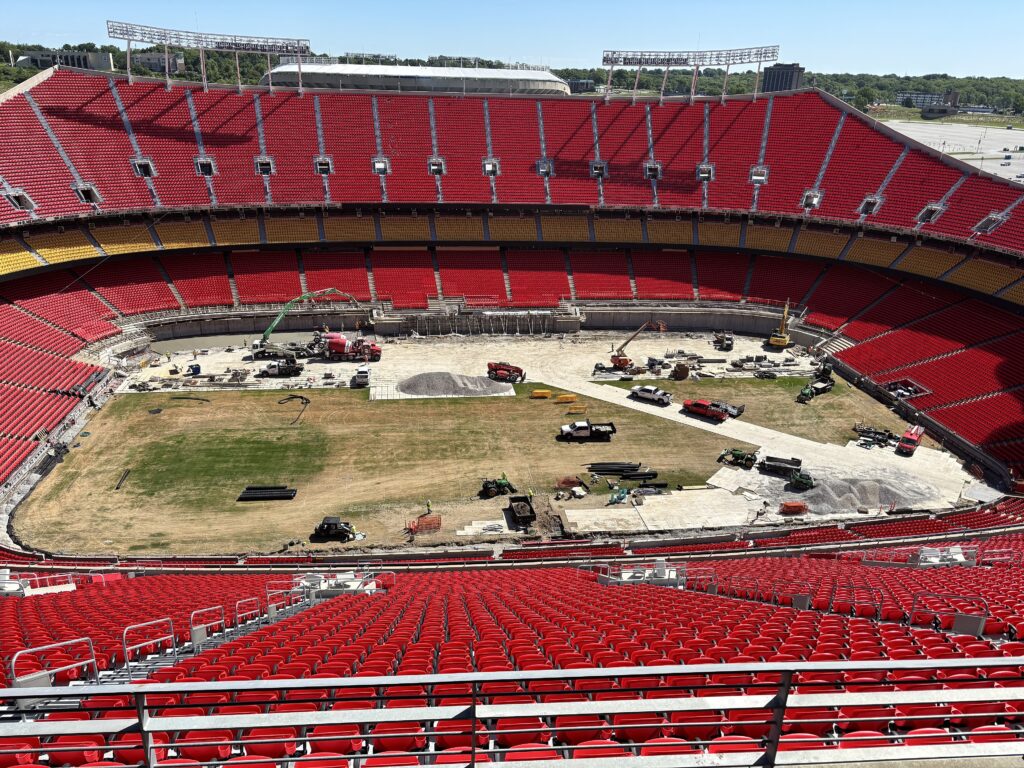
Meanwhile, FIFA controls the tournament’s most profitable revenue streams — broadcasting rights, global sponsorships, ticket sales, and in-stadium advertising — leaving cities to cover much of the costs while earning only a small share of the financial gains.
Political incentives also help explain why cities continue to pursue these events despite the evidence. Hosting a World Cup or Olympics gives leaders global visibility and symbolic prestige. The benefits are immediate and highly visible, while the costs are borne by taxpayers and often spread over many years. This dynamic encourages optimistic forecasts and ambitious bids, even when the economic fundamentals are weak. In practice, mega-events often act less as engines of economic growth than as risky public ventures whose financial impacts last well beyond the celebrations.





0 Comments