

Long before policymakers conceived New York City Groceries, entrepreneurs fed people. They did it cheaply, and they made people better off in unimaginable ways.
The approximately 63,000 grocery stores in the US (according to 2023 Census estimates) indicate a great deal of competition, which encourages owners to lower prices and improve food quality. The figure below indicates that these stores must also compete with approximately 650,000 domestic food and beverage retailers.
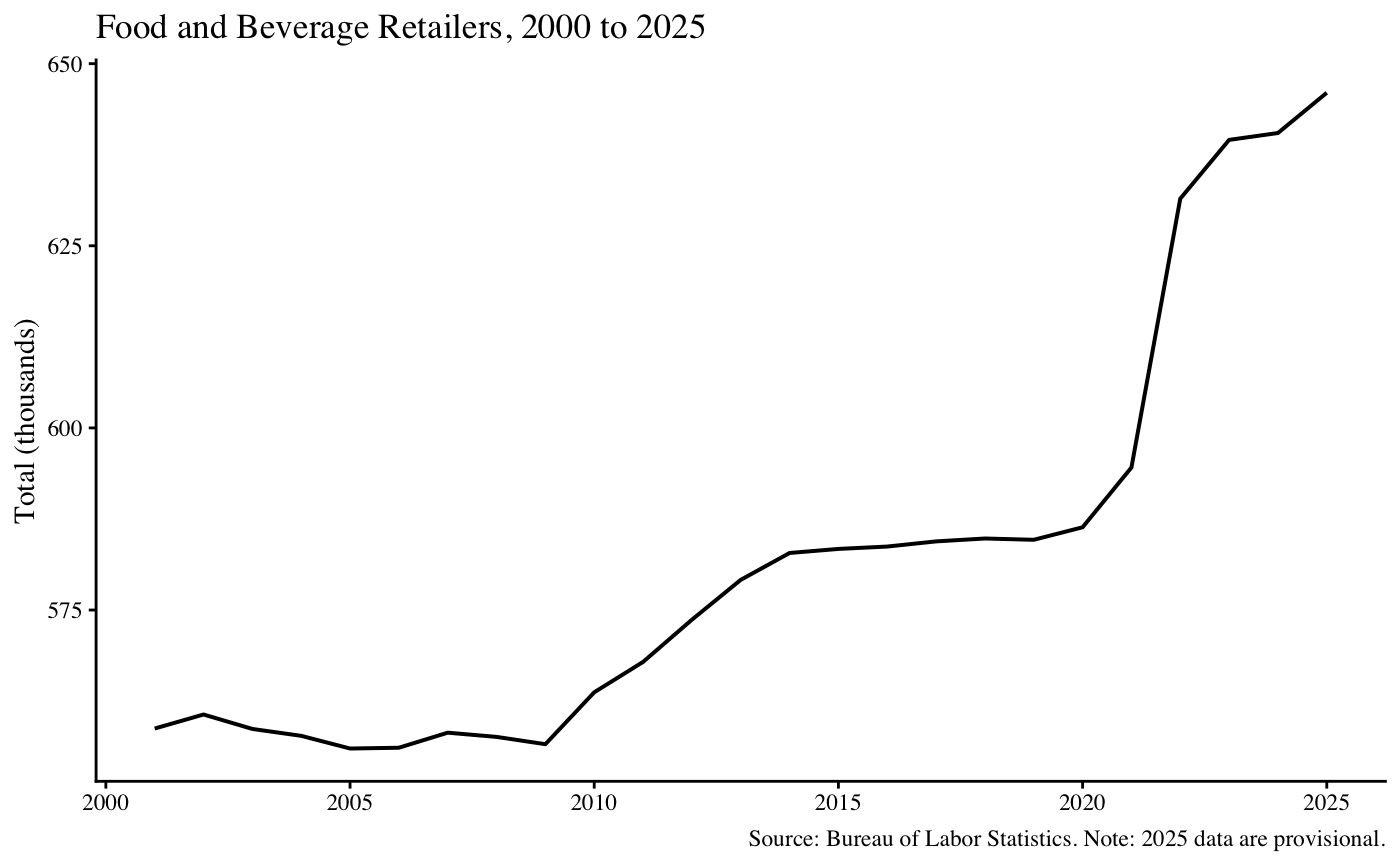
That’s a lot of competition, and it helps lower prices while producing a dizzying array of goods and innovation that makes the mythical land of Cockaigne look paltry. While higher prices understandably attract attention — recent CPI data for food indicates a 3 percent rise over the previous year — innovation takes place in myriad ways that are easy to overlook.
Open-air marketplaces and food halls are just some of the ways people innovate. To clarify, think about the mundane problems associated with acquiring food. There are myriad transaction costs associated with finding a seller interested in selling what you want, assessing the quality of an item, trusting that the seller isn’t cheating you, and so on. Entrepreneurs develop public or open-air markets and food halls to earn profits, and they do so by lowering transaction costs for consumers and providing innovative services.
Historical and modern examples alike indicate the extent of innovation. Since 1742, Boston’s Faneuil Hall, or “The Cradle of Liberty” (and later the Quincy Market), has provided organized spaces for people to buy and sell food in mutually beneficial ways. The Redding Terminal Market is now a popular indoor marketplace and food hall, but it developed from the open-air markets in Philadelphia during the late nineteenth century. Similar kinds of commercial activity even developed in New York, perhaps ironically, in places now being touted as sites for government-owned grocery stores. La Marqueta, or the Park Avenue Market, emerged from the haphazard commerce underneath a viaduct, where people sold goods to customers willing to pay for them. Such commercial activity expanded so much that by 1936, the city enacted a more orderly marketplace.
Food halls, food courts, food truck parks, and similar ventures are now common, reflecting entrepreneurs’ efforts to earn profits by providing goods and experiences customers value.
On recent trips to Tampa and London, I learned of two interesting examples of people developing food halls through private enterprise. In Tampa, the Oxford Exchange (opened in its current form in 2012) was once home to an arcade of shops in the 1920s. It was converted from a bookstore in the 2010s and now hosts several dining rooms, a coffee and wine bar, lounges, meeting spaces, and shops. London’s Mercato Mayfair (one of several food halls owned by Mercato Metropolitano) is located in a deconsecrated church and houses various food and beverage vendors.
From my brief visits, these places seem like vibrant focal points where eating is perhaps the least interesting thing to do. They offer comfort and service, novel and quality foods, places to meet, and more. The profit motive and the search for innovation, not governmental food policy, drive these efforts.
WorldFoodTrucks offers another case of private food innovation. Located in Kissimmee, Florida, WorldFoodTrucks is the first and largest food truck park in the US, where customers can find more than 100 trucks, each offering different culinary options, including more than 80 world cuisines. The park is open every day of the year (until 4 am on weekends), and its operators report serving more than 13 million customers since the park opened around 2023. Not only does the park offer food, but it also provides a convenient and inexpensive way to feed larger groups of people with interesting cuisine at corporate and celebratory events, such as graduations and weddings. Such market-driven opportunities are innovations because they satisfy several goals people value beyond simply providing cheaper food.
The economist Steven Horwitz wrote that grocery stores are indicators of American progress. We should broaden these indicators to include food halls, food trucks, and other ways entrepreneurs try to feed people. Such progress benefits picky eaters, the fitness-conscious, people who want to grill out on a nice day, those trying to meal prep for the week, people making dinner for date night, those preparing a family meal on a tight budget, and many others. Progress is progress for rich and poor alike, and it serves myriad individual goals.
Rather than devise policies that consistently fail to make people better off, perhaps we should understand how entrepreneurial activities actually put food on the table and make people better off in ways they value.





0 Comments